Open PhD position at the National Museum of Natural Sciences (CSIC) 2027-2030
SOCIAL BUFFERING: THE STRESS-REDUCING POWER OF SOCIAL INTERACTIONS
(Project: PID2025-173073NB-I00)
Supervisors: Dr. Judith Morales (National Museum of Natural Sciences – CSIC, Spain) and Dr. Wendt Müller (University of Antwerp, Belgium)
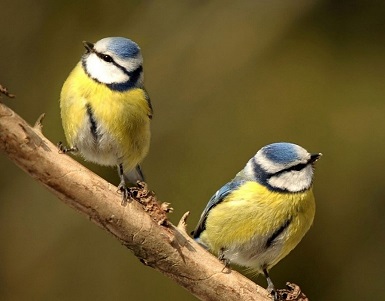
Most bird species are social: they live in groups, form relationships with others, and rely on their social environment to survive and reproduce. But how does social life help animals cope with environmental stress? Does living in dense, familiar communities promote cooperation and coordinated responses to predators, without increasing conflict? And could these benefits extend across generations, shaping how parents interact with their offspring?
To answer these questions, you will study social behaviour and stress responses in a wild population of blue tits. Among other things, you will carry out fieldwork during spring in the forests of Miraflores de la Sierra (Madrid), where you will conduct experimental manipulation of social contexts involving behavioural assessments (video observations) and cognitive tests. You will combine this with state-of-the-art physiological, molecular and epigenetic analyses in the laboratory.
THE FORMATIVE ENVIRONMENT
You will be based at the National Museum of Natural Sciences-CSIC, in Madrid, a multidisciplinary research centre with strong tradition in behavioural ecology and evolutionary research. You will join the Social Evolution Unit, a dynamic, supportive and collegiate research team led by Judith Morales, which forms part of the Department of Evolutionary Ecology.
The thesis will be co-supervised by Wendt Müller, who leads the Family Ecology Unit, which forms part of the University of Antwerp, Belgium. This collaboration provides opportunities to establish contacts with researchers from both institutions and to visit and undertake research stays there.
YOUR PROFILE
We are looking for an enthusiastic and curious PhD candidate with a strong interest in animal behaviour and evolutionary biology, and who is motivated to do fieldwork with wild birds. The project is highly collaborative, so you should enjoy working as part of a team, communicating openly and clearly, and working in English. Previous experience in related research or fieldwork is welcome, but not required. We seek for someone that is motivated to learn, willing to take on new challenges, and excited to carry out experiments in the field, analyse data and publish the results.
HOW TO APPLY
Please, send a short letter of motivation and your CV, in English or in Spanish, by 30 October to jmorales@mncn.csic.es
This is a 4-year position (2027-2030) funded by the project described below. The call will be published soon on the CSIC website, and candidates will need to apply through the CONVOCA application system. If you have any doubt, do not hesitate to ask.
Requirement: master degree in Biology or similar
AIM, RELEVANCE AND IMPACT
The project will advance our understanding of how social interactions shape individual differences in stress and behaviour, and how these effects can be transmitted across generations. By revealing the role of social density and familiarity in buffering environmental stress, the project will bridge evolutionary ecology, behavioural science, physiology and epigenetics, whilst providing new insights into the developmental origins of individual differences in stress responses. The results will help generate predictions about how populations may adapt to anthropogenic changes in the environment and, more generally, to any changes that affect social density and social structure. Furthermore, the findings may have broader relevance for the social and medical sciences by providing new insights into the mechanisms underlying social behaviour and its maladaptive forms (= disorders) in humans.
ETHICAL STATEMENT: The project aims to delve into the evolution of social behaviour in animals, so it does involve working with wild birds. However, we will take care of animal welfare throughout the project. All the procedures have been approved by the Ethics Committees for experimentation at the National Museum of Natural Sciences, CSIC and the Community of Madrid, and were categorized as minimal.

